

Marine Programme

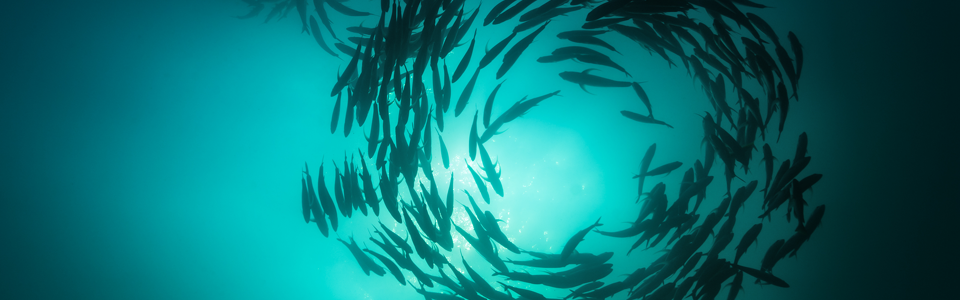
Fish on a reef © Christian Laufenberg

Fish on a reef © Christian Laufenberg

The ISU’s Marine Programme was initiated to help strengthen consensus around the best solutions for the sustainable management of wild marine fish stocks, and to catalyse action in pursuit of these through partnerships between the public sector, the fishing industry, the wider private sector and NGOs.

There are many pressures that are causing profound changes in the character of the world’s oceans. These range from the effects of acidification and warming to the consequences of pollution, including the build up of plastic waste and the emergence of ‘dead zones’ in coastal areas caused mainly by agricultural fertilisers. Further pressures arise from how we exploit living marine resources, including stocks of fish. The need for action in all these areas is urgent, and in the case of fisheries there are solutions that could make a significant positive difference quite quickly.

Growing pressure on marine capture fisheries is arising from the expanding human population and increased demand for seafood. These drivers have stimulated more intense fishing pressure, which in turn has caused a decline in the productivity of many fish stocks. According to the UN Food and Agriculture Organisation (FAO), 32% of fish stocks are now overexploited, depleted or recovering from depletion, and this figure is rising every year.

As a result, wild fish is providing less food and income and supporting fewer livelihoods than it could do. Moreover, in many cases, overexploited fish stocks are also more vulnerable to external pressures, such as climate change and pollution.  Action can be taken to address these trends, however.

Research and extensive consultation undertaken by the ISU reveals that practical solutions are available and illustrates how benefits are already being realised in fisheries around the world, through the practical use of a wide range of tried and tested tools for sustainability.

Fisheries contribute approximately US$274 billion to global GDP. They are on the whole currently an underperforming asset, however. The World Bank estimates that if fish stocks were managed optimally they could deliver an additional $50 billion in value each year.

On top of the economic opportunity are the many social benefits that flow from sustainably managed fish stocks, including in the form of jobs and livelihoods. Directly and indirectly, fisheries provide employment for hundreds of millions of people. The vast majority of these are in developing countries, where the sector often plays a key role in preventing and reducing poverty. Only sustainably managed fish stocks can ensure the viability of these livelihoods and, following recovery, generate more employment in the long-term. Fish is a renewable and healthy food source which currently supplies one billion people with their main source of protein, again with the majority in developing countries.

Tuna fleet in Samoa © Wolcott Henry

With the economic, social and nutritional benefits of fisheries very much in mind, the ISU commissioned research to investigate where making the transition to more sustainable fisheries is making a positive difference in terms of higher catches, higher earnings, more secure jobs and marine ecosystem recovery. Many of these examples are presented in a special report which demonstrates how such transitions are both beneficial and achievable. There are a wide range of specific interventions available in setting fisheries on more sustainable trajectories. The tools and approaches used in different fisheries are varied and context-specific.

But while there is no universal or single best method for moving towards the more sustainable management of fish stocks, the ISU’s research and consultation has identified a number of themes that are common to the majority of successful interventions. These include taking a smart approach toward economics; looking at fish stocks in the context of the ecosystem in which they are found and adopting robust management. All of these depend for their success on another and overarching requirement, and that is the achievement of good governance involving comprehensive stakeholder engagement.

The ISU aims to build on the conclusions derived from research and outreach to develop activities that will enable the many positive initiatives seen in different parts of the world to be scaled-up and replicated.


To view the Joint Declaration for action on Wild Marine Fisheries, please click here.

To view the Marine Programme’s latest report, please follow the link below:

Towards Global Sustainable Fisheries: The Opportunity for Transition

To view Charlotte Tindall’s report, please follow the link below:

Fisheries in Transition: Fifty interviews with the fishing sector

To view the case studies map, please click here.


Video message from HRH The Prince of Wales: shown at The Economist’s World Ocean’s Summit in Singapore, 22nd-24th February 2012